
Rural Mobility and the Human Services Connection
The Human Services Transportation Plan, or HSTP for short, is concerned with rural mobility, with a focus on the ability of those who don't drive - whether due to age, income, or disability - to access the health and human services available to them. It is concerned with safe and reliable travel choices that get people where they need to be, even if they don’t drive.
A network of transportation partners across the Peninsula region provide a range of services that are vital to rural mobility. Learn about the more than two dozen public transit agencies, tribes, health clinics, non-profit and community groups, and private carriers who are connecting residents with services on a daily basis here.
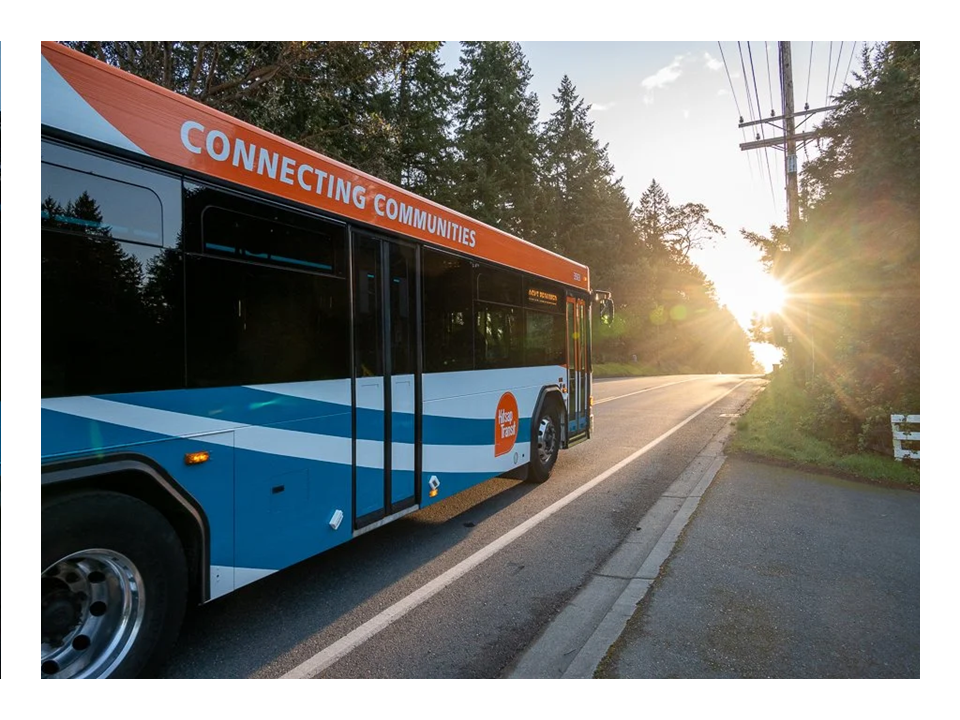
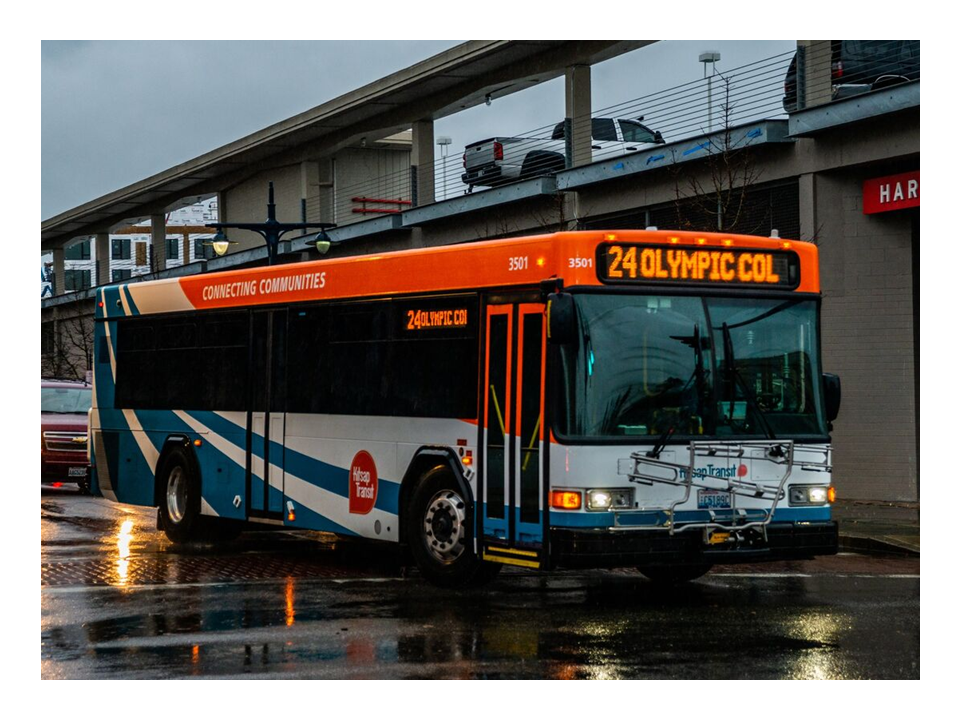
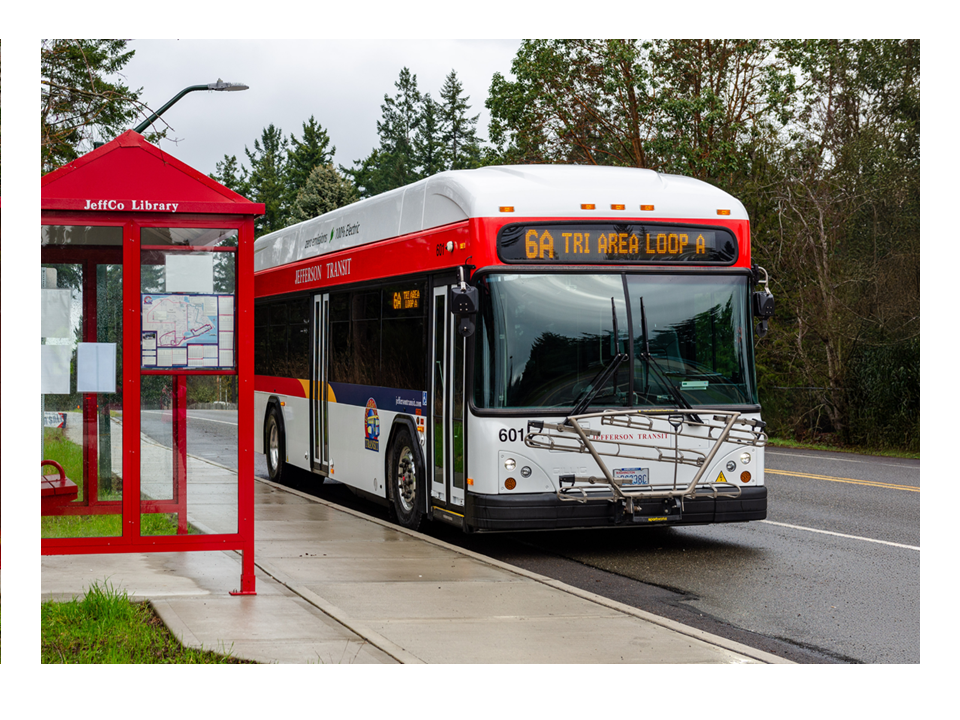
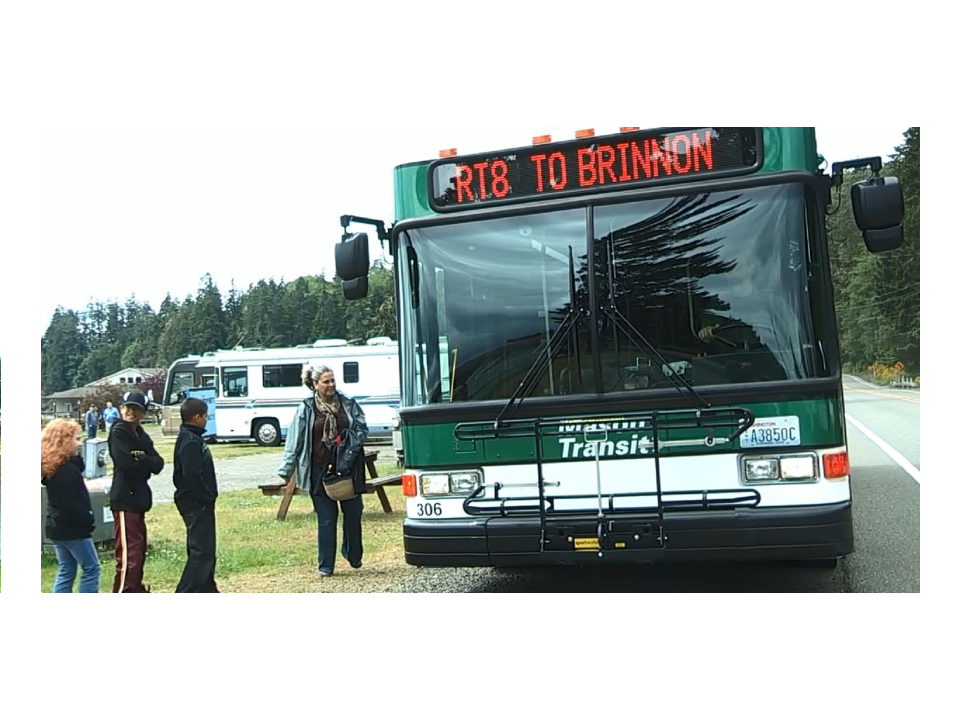
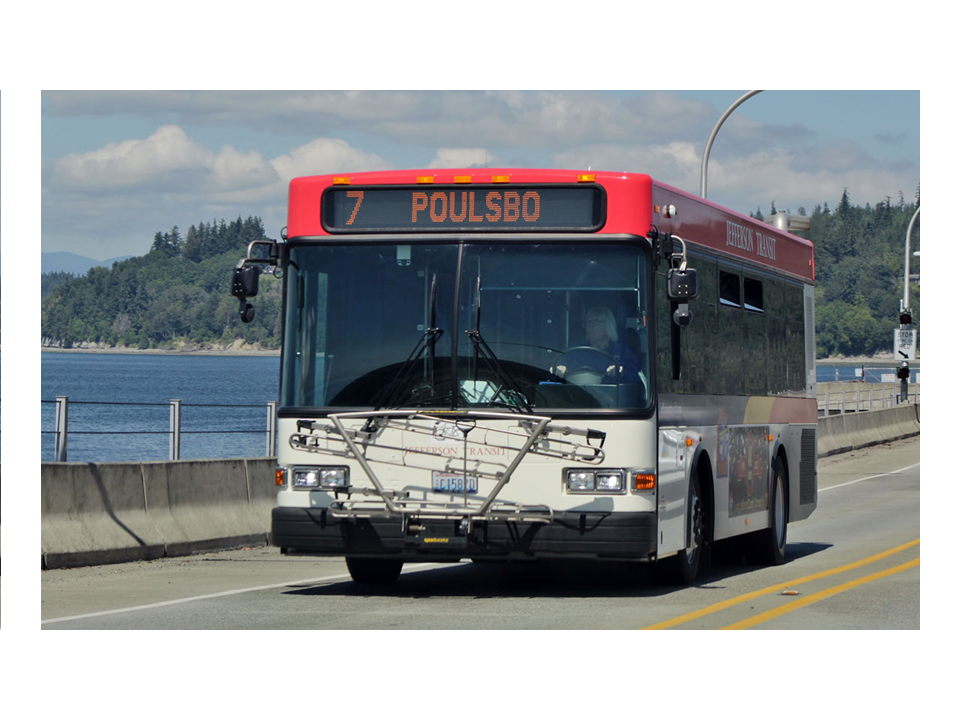
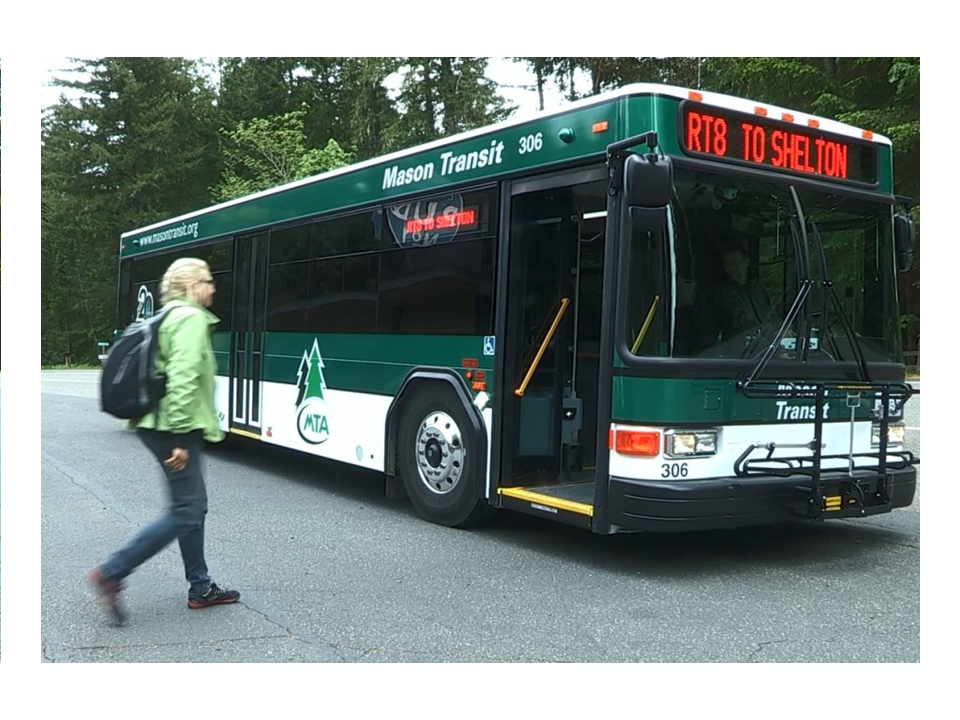
Scheduled fixed-route service and deviated fixed-route service is concentrated on major corridors connecting our cities and our ferry terminals, and in town, where it provides essential access and circulation. This kind of service works best when it’s connecting population centers with jobs, commerce, and services, and for very long-distance intercity trips.
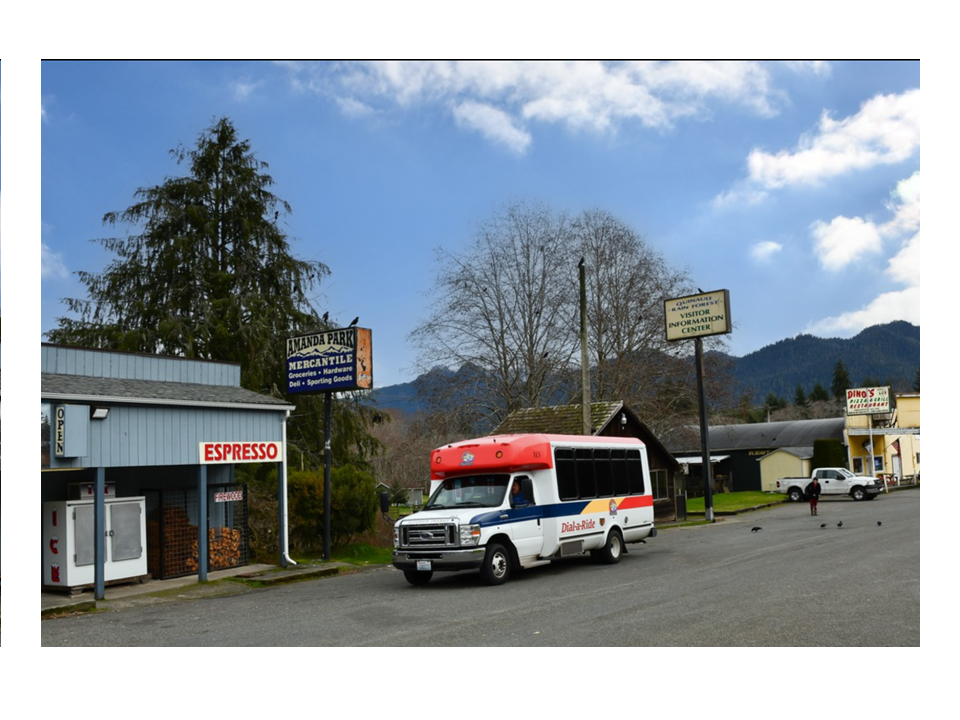
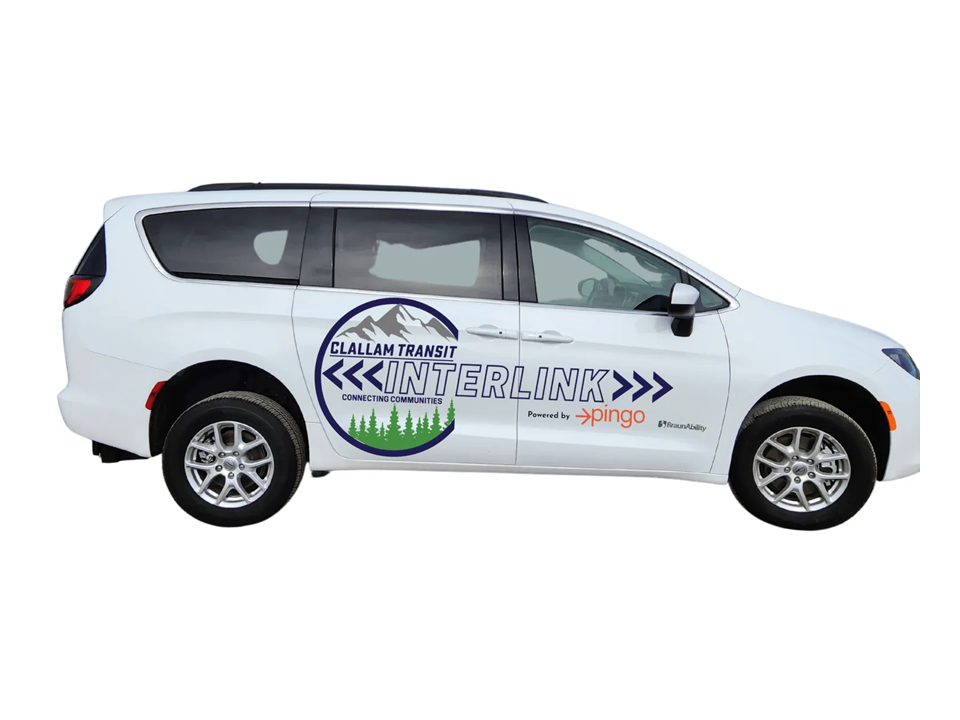
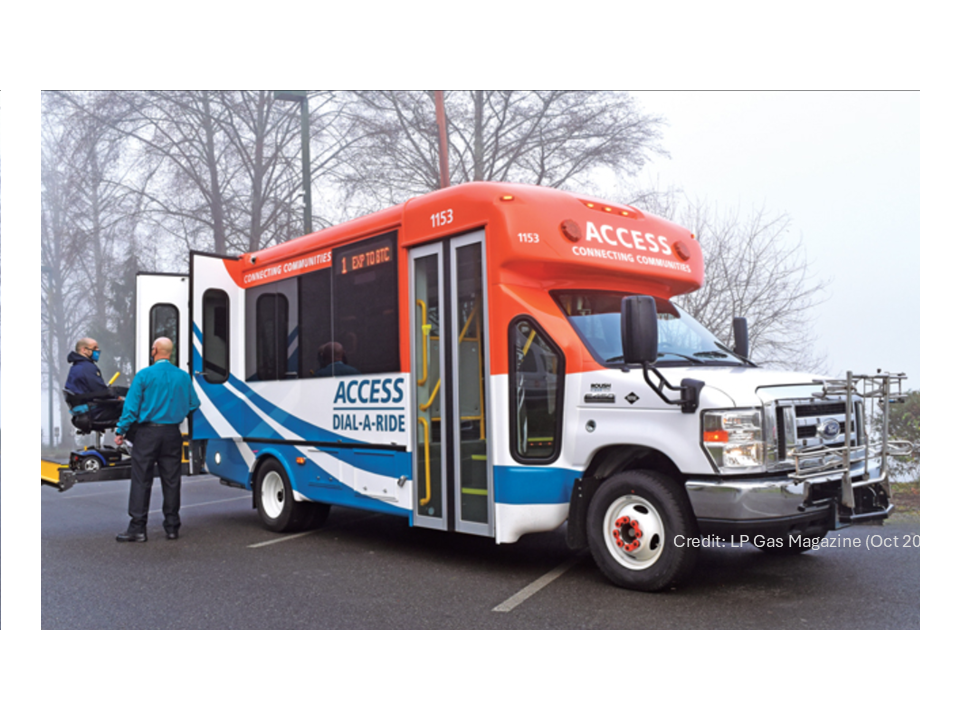
On-demand or demand-response service is better at rural “collect and connect” access than is fixed-route service and is better suited for the door-to-door transport that many in outlying areas require. Emerging technologies are revolutionizing dispatching and opening doors to new ways of structuring this kind of service.
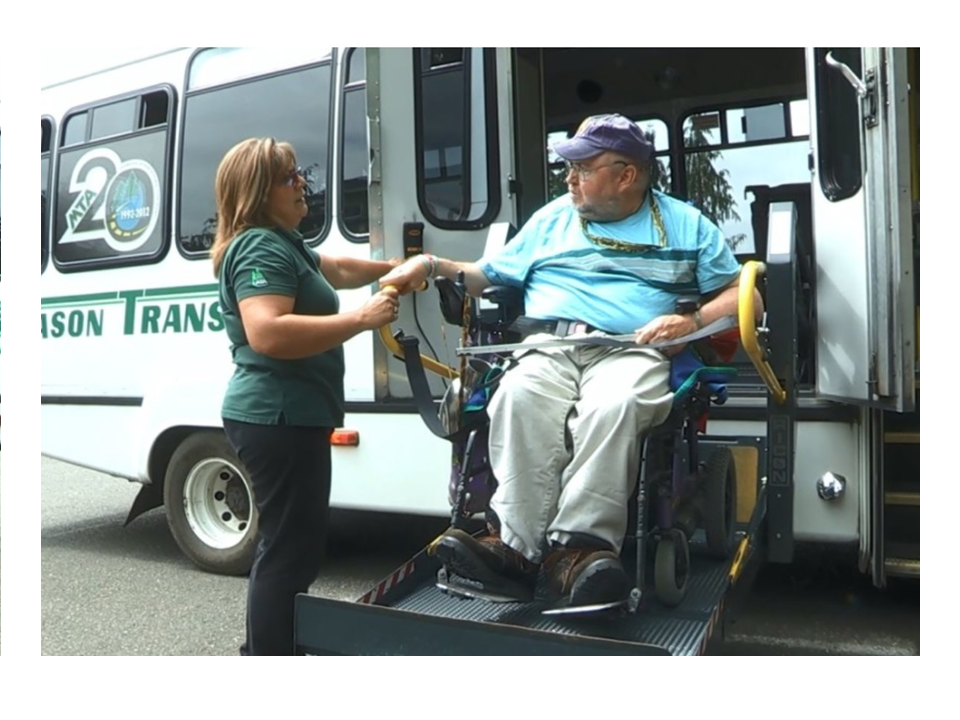
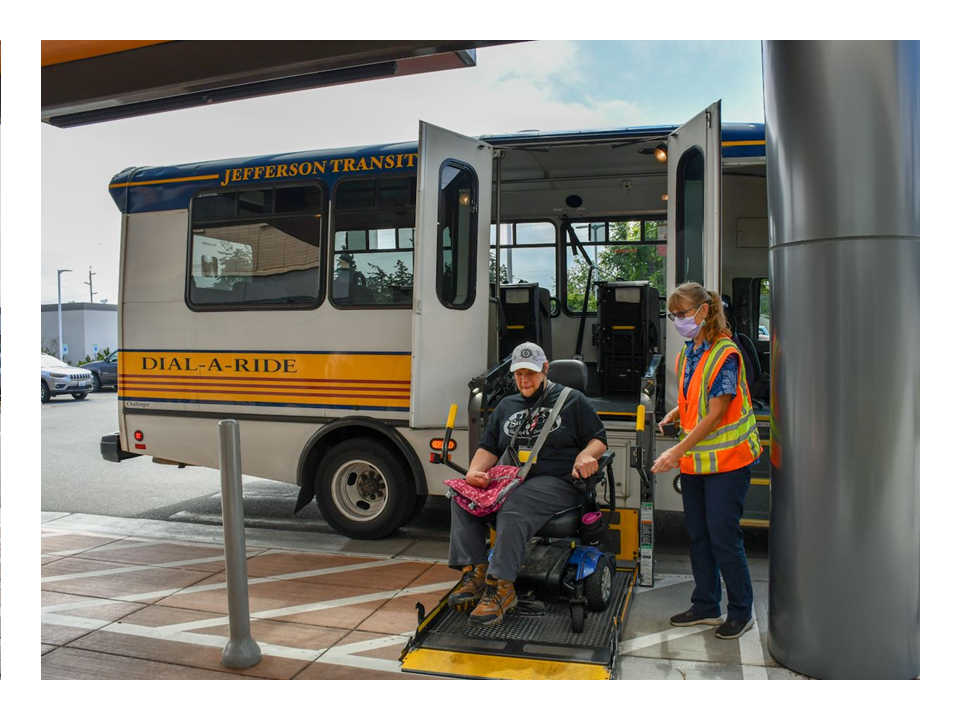
Complementary on-demand paratransit services for qualified people who can’t use public transportation are typically available within ¾ of a mile of fixed-route transit service. Mason Transit removed qualification and distance barriers for its on-demand paratransit service and now offers it countywide.
Tribal transit fixed-route services, health center shuttle services, and elder transport programs operate transportation services tailored to the unique needs of each community. In many cases, services are available for non-tribal members as well.
Non-profit or community-based mobility programs include volunteer driver programs, education and outreach programs, senior center shuttles, and more. They strengthen rural mobility with a network of services designed for specific travel needs, many of which are integrated into the broader fabric of health and human services.
Non-emergency medical transportation (NEMT), sometimes described as “Medicaid transportation,” is primarily a state-brokered service that provides reservation-based transportation to and from medical appointments for Medicaid clients of any age or anyone covered under Washington’s Apple Health program. It also provides transportation assistance in the form of bus passes and fuel vouchers for qualified residents. The term does not need to apply only to Medicaid-supported travel, though. Some of the specialized transportation required for behavioral health purposes or medically assisted therapy should also be considered NEMT but without the income restrictions.
This is not just a transportation plan, though. It is concerned with access to health and human services, especially for those who don’t drive.
Right Care, Right Time, Right Place
The HSTP is where broad personal and community health outcomes intersect with transportation or more accurately, with personal mobility. Our HSTP recognizes the role that personal mobility plays in the health outcomes and wellbeing of those in our communities, regardless of whether they drive. This is consistent with the thinking of health and human services providers we’re engaging.
This is a broad sector. Community-based workers are engaged in the full range of health care and human services, from routine primary care and family practices to specialized services like behavioral health, geriatric and pediatric care, oncology, and mental health services. They provide social services, staff food banks and nutrition programs, veterans programs, community action programs, at-risk youth programs, job training programs, recovery navigator programs, government services, and more. Providers are non-profit, for-profit, tribal, community-based, and local and state government institutions and organizations.
Reliable transportation and the access it enables underpins the health and human services they provide and the health outcomes of the people they serve.
Lack of reliable transportation is identified in local health improvement plans and Community Health Needs Assessments (CHNA) throughout the region as a barrier to health outcomes and patient access to care. Health and human services providers recognize reliable transportation as a social determinant of health that affects whether people can actually benefit from the health care system and the services available to them.
There are cascading effects of unreliable transportation for rural community systems that are already under strain. Without reliable transportation:
primary care is difficult to reach
behavioral health appointments are missed
specialty care like obstetrics and dialysis is postponed
emergency services are over-used
hospital discharges are difficult
food and nutrition programs aren’t accessible to everyone who is hungry
housing options are reduced
social service referrals are hard to make because they’re hard to keep
In a region with a chronic shortage of health care providers and excessive wait times for medical and behavioral health appointments, lack of reliable transportation results in delayed care, missed appointments, and inefficient use of scarce health care resources.
Reliable transportation doesn’t just support health care; reliable transportation makes it possible.
Reliable Transportation
Reliable transportation means different things to different people, so it’s good to clarify how we use it in this HSTP. Reliable transportation means people have the ability to get where they need to go safely, reliably, and affordably. Reliable transportation underpins personal mobility, and personal mobility enables access.
Most of us provide our own reliable transportation, driving our own personal vehicles where and when we choose. We drive as long as we physically can or as long as we can afford to. At some point most of us need help with transportation, though.
For those of us who don’t drive (and for many of us who do), reliable transportation is a bus that is convenient to get to, is going where we’re going, and operates on a schedule that fits our needs.
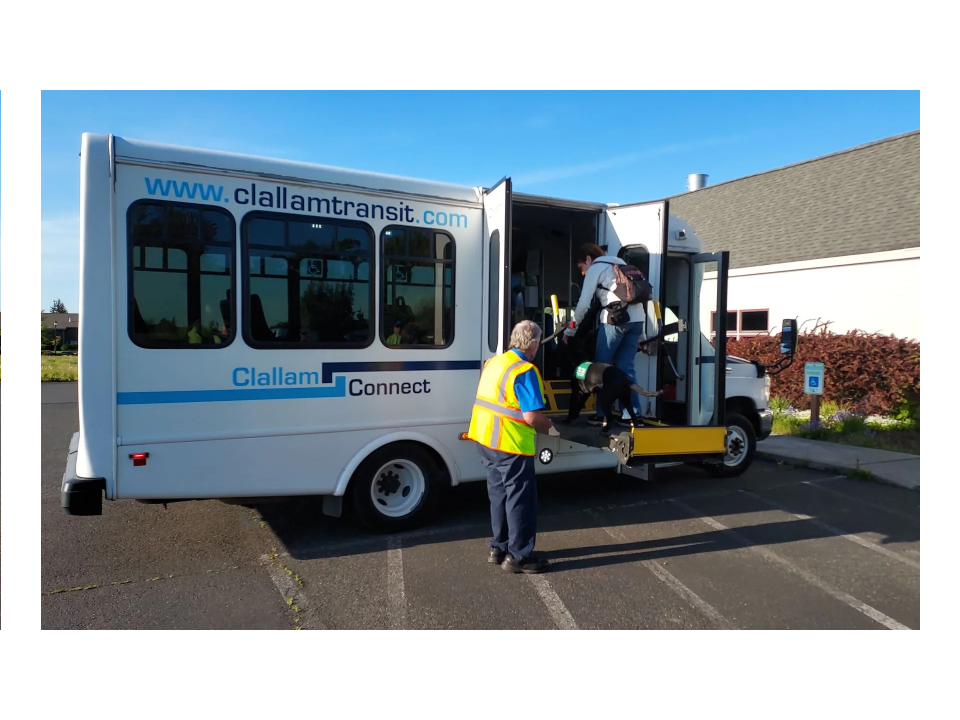
For others reliable transportation means a door-to-door paratransit van that shows up at the scheduled window of time to pick them up and take them where they need to go, possibly in a wheelchair or other mobility device.
Others rely on volunteer-driver programs to get them to and from their dialysis appointments in Seattle, or on shuttles operated by senior centers that pick passengers up for meal programs or shopping, or specialized services offered by Recovery Navigator Programs to help people keep critical appointments for their behavioral health or road to recovery care.
These are just a few examples of what “reliable transportation” looks like in a highly rural region. Rural mobility depends on a coordinated package of reliable transportation measures operated by a range of service providers working together to ensure people have access to the essential services and opportunities available to them.
It takes coordination, collaboration, and partnerships across sectors to meet mobility needs of the most vulnerable in the region and overcome difficult barriers to rural access. This HSTP aims to support them in their work.
Regional Context
The challenges we wrestle with in this HSTP have a lot to do with the geography and rural character that makes the Peninsula Region so very special.
In transportation terms, the Peninsula Region encompasses four counties on the Olympic and Kitsap Peninsulas: Clallam, Jefferson, Kitsap, and Mason Counties. It’s a highly rural region, with vast national parks and forests, military lands and wildlife preserves, resource lands, and abundant recreational opportunities. Ten tribes have belonged to this land for a very long time.
This place is beautiful, rugged, and remote. Our mobility depends on a sparse network of state highways, state and local ferries, and rural roads that connect far-flung rural homes and hamlets to services and economic opportunities. We enjoy a remarkable regional transit system that our four transit agencies have forged between them and which allows convenient and affordable travel within and between cities across the region and beyond.
While this HSTP is focused on transportation and rural mobility, rural mobility issues and opportunities are shaped by where people live. Getting around without a car has its challenges no matter where a person lives. Distances are far. Densities are low. Destinations are scattered. What’s practical in town is different than in the outlying areas, though. This is important when considering the nature of barriers and gaps and the effectiveness of potential strategies.
In Town or Out of Town
Those who live in town have more options than those who don’t. They live close to convenient transit backed up by an array of non-profit service providers and paratransit. People can take advantage of the coordinated regional transit system that Clallam Transit, Jefferson Transit, Kitsap Transit, and Mason Transit have knit together between them for affordable travel around the region and to make ferry connections for travel to and from Seattle, Edmonds, Whidbey Island, and British Columbia. Distances in town can be close enough to walk or ride a bike if there is infrastructure to do that safely. And many of the essential destinations people need to access regularly for services and day-to-day needs are in town.
Still, those who live in town and don’t drive have to put more thought into how they will get around than those who do drive. They organize their trips around bus schedules and the days and hours of operation. They have to plan ahead to reserve a pick-up or book a ride. This usually entails a “window of time” to be ready for the pick-up. Running a quick errand requires coordination. Odds are good they’ve had to ask family or friends for a ride at some point.
It’s a somewhat different transportation story for those who don’t live in town. And that’s most of us.
Fully 2/3 of people in this four-county region live outside any incorporated place, with only 33 percent of us living in town. In the three most rural counties – Clallam, Jefferson, and Mason – only 30 percent of the population lives in a city while everyone else lives scattered throughout the vast unincorporated areas and remote places that make this region special.
Rural Realities Make Tough Issues Tougher
The reality is that for many or even most of us living on the Olympic Peninsula or in outlying areas of the Kitsap Peninsula, driving is the only practical option. It comes with our rural lifestyles and makes them possible. And it works well, until it doesn’t.
People who’ve lived all their lives on homesteads and are aging in place, or spent decades living on backcountry roads face difficult choices as eyesight diminishes and driving gets harder. They may live far outside the complementary paratransit service boundaries that transit agencies provide. Or they may live on unimproved roads or have overgrown driveways that are impassable for paratransit or mobile health vehicles. Too often people continue to drive long after it is safe, presenting a risk to themselves and others on the road as their need to access services grows.
Working people who can’t afford housing in town move further out in search of lower rent or a property they can afford to buy. Driving is the second highest expense after housing for most households, though. Increased costs of gas and vehicle wear and tear erode savings on housing costs and creates vulnerabilities. Skyrocketing fuel costs can leave a family with painful budget decisions, but without gas there’s no job, no paycheck, and a bad situation can suddenly get much worse.
People receiving care for behavioral health issues, cognitive disorders, or substance use disorder must attend appointments for regular treatments, but many are unable to drive or to use public transit without risking harm to themselves or others. Or they are easily confused or overwhelmed by the complexity of making travel decisions. Across the region communities are trying to turn the tide of chronic mental health issues with an array of programs, but getting to those programs can be nearly impossible for the people who need them most.
With the exception of some of our unincorporated hamlets and crossroads - places like Quilcene, Blyn, Clallam Bay, Belfair, and Chimacum - walking and biking are impractical alternatives to driving. And unless people live in those crossroad communities or close to a highway corridor, where the backbone of our transit system operates, the nearest bus route may be many miles away. Unfortunately, many of the services they need are also many miles away.
It takes a variety of services to meet our rural mobility needs. Fewer transportation services are practical in outlying areas than in town and none are as convenient as driving. What does work in outlying areas is nimble, responsive, and targeted at specific mobility needs. It’s complementary to other services operating closer in town and can offer valuable “collect and connect” opportunities for some people. Non-profits play an important role in delivering these services alongside their transit partners. New app-based tools are creating opportunities for innovative service delivery approaches, too.
Our partners are doing a lot. More needs to be done. The HSTP opens doors to grants that can help us get more done.
Target Populations
Most people in the Peninsula Region drive for most or all of their daily travel needs. But not everyone can drive or can afford to drive. For those who don’t drive, reliable transportation can be hard to come by. That’s why the HSTP is focused on certain population characteristics.
A small number of population characteristics are reliable indicators that someone may not have reliable transportation and may need assistance with travel. For HSTP purposes, three characteristics are associated with an increased risk of being mobility challenged: seniors, low income, and disability.
Population 65 and Older
Our climate, the scenic beauty, the allure of rural lifestyles and the ability to relocate remains a siren for retirees.
Large numbers of retirees have been moving to the north Olympic Peninsula, in the rain shadow of the Olympics, for decades. No one in Washington comes close to Jefferson County’s share of population that is 65 or older. The Office of Financial Management estimates 42.3 percent of Jefferson County’s population is 65 or older. According to Census data, it is among the top five “oldest counties” in the whole country!
As the table to the right demonstrates, though, our whole region is “older” than the state average. Kitsap and Mason Counties are a good bit “younger” than Clallam and Jefferson Counties, but they’re still older than the state average. While 18.4 percent of Washington’s population is 65 or older, 26.2 percent of the Peninsula Region’s population is in that age bracket. If things go as projected, that should peak in 2035 at just shy of 29 percent of the population before it begins gradually receding and the region “grows younger.”
Age is a common indicator of a declining ability to drive. While many people continue to drive well into their later years, 65 is the average age at which reflexes start to slow, eyesight diminishes, and eventually, driving becomes more difficult or impossible. At the same time, people 65 and older tend to have more medical care needs and rely more on human services than the public at large. Senior centers, senior lunch programs, and senior wellness programs are available throughout the region, but people have to be able to get there and back to take advantage of them. That's particularly challenging in a rural region where people often live far outside of town. Older adults face increased risk of social isolation when driving is no longer practical. Or they continue to drive long after it is safe to do so, creating a risk for themselves and others on the road.
People with Disabilities
People who’ve lived independent, self-reliant rural lifestyles can find themselves with a disability that upends that independence. People with one or more physical, sensory, cognitive, or developmental disabilities may be unable to drive and so are reliant on transportation services to meet some or all of their mobility needs. This may require wheelchair accessible vehicles for transport. Other disabilities entail consideration of behavioral factors to ensure safe transport for the passenger, others in the vehicle, and the driver. For some, there may be vision impairments or critical thinking issues. Disability is a broad, inclusive term with many dimensions when it comes to mobility. All of those dimensions are even more complicated in a highly rural region.
Regardless of the condition, it’s important that people with disabilities have reliable access to work, on-going care, and the needs of daily life. This is critically important to managing their disabilities, engaging in everyday activities, and living a fulfilling life. This applies to temporary disabilities, too, such as when a person breaks a leg or is confined to a mobility device for post-surgery recuperation. Even the most self-sufficient among us can be incapacitated by an accident or illness, requiring support to meet mobility needs.
Low-Income Households
The cost of owning and operating a personal vehicle is widely recognized to be the second highest household expense after housing for most households. Anecdotally we hear of people who have cars but they can’t afford to keep them fueled up and running or insured. Help with gas money accounted for about 25 percent of the transportation assistance calls WA 211 received from this region over the past year. Everything from going to work, routine child care and school drop-offs, to medical appointments, basic shopping and services, and recreation are much harder for low-income households because of the cost of travel. Low income households rely on transportation from friends and family as well as transit and community-based programs, or they fall between the cracks.
It is hard to exaggerate the profound impacts that income has on travel reliability in a rural region. With so many people barely making ends meet working full-time at the prevailing wages available across the region, it isn’t hard to imagine how an unexpected expense can unravel a household budget and leave people suddenly without the means of travel they depended on. Income seems to be a common denominator of vulnerability and risk for both travel and health outcomes.
Additional Considerations
These three broad indicators - age 65+, disability, and poverty - account for most of the factors that indicate some travel assistance may be needed to meet their day-to-day needs. But we want to pay attention to a few other segments of our community.
Tribes
The Peninsula Region encompasses the lands to which ten tribal nations belong. Five of those nations are members of PRTPO. No RTPO in the state comes close to the tribal representation on PRTPO. This increases our awareness of the wide range of human services and health care offered to our communities by the tribes as well as the transit and tribal transportation services they provide. There is good coordination between tribes in the region and the non-tribal transit, county, city, and state stakeholders on these and other matters, and there is room to grow. We’re also aware of some of the deep cultural connections that exist between tribal nations. Travel between tribal nations occurs regularly for reasons ranging from elder programs and familial celebrations to specialized health services, canoe journeys, potlatches, councils, and more. The need for long-distance travel between reservations often occurs outside of scheduled transit and intercity bus service.
Veterans
Almost 14 percent of the region’s population age 18 years or older has served in the military. Over 62 percent of the region’s vets live in Kitsap County, which is also where the largest share of vets under the age of 65 live (72 percent). The North Olympic Peninsula accounts for another 22 percent of the region’s veterans and 15 percent live in Mason County. Unfortunately, veterans facilities are concentrated at American Lake and JBLM in Pierce County and in Seattle. While those locations can be accessed via transit and other services, these can be complicated trips to navigate under the best of circumstances, which doesn’t apply to everyone. Veterans transportation services provided by non-profits requires a minimum of seven days advance notice and is on a space-available basis.
RURAL MOBILITY FOR ALL
Regardless of our specific transportation situation, as rural residents we have the same needs for travel in the Peninsula Region as people in more urban parts of the state. We need to get to work, housing, school, health care, social services, food and shopping, recreation and social activities, and civic engagement. We just travel much further to reach our destinations. That’s inherent in our rural lifestyles. And it’s why personal vehicles offer the only convenient means of travel for most of us, most of the time. For those of us who don’t drive, personal mobility takes extra time and lots of coordination.
Just like those of us who do drive, rural residents who don’t drive have various kinds of mobility needs and require different transportation services depending on those needs and their circumstances. There are over two dozen transportation providers offering a wide array of services, and yet people still have difficulty getting where they’re going. What are the barriers that keep people from using the transportation resources that are available now? Where are the service gaps and unmet needs?
We are tapping insights from community members and service providers to update our understanding of the barriers and gaps in service that make it harder, longer, or more difficult for people to get where they need to be when they need to be there. Read on and let us know if we've missed anything.
SECTION CONTENTS
Right Care, Right Time, Right Place
Reliable Transportation
Regional Context
Target Populations
HSTP online site index
Introduction
Human Services Transportation
Unmet Needs and Barriers
Mobility Strategies
Implementation Funding Support
Inventory of Transportation Services
HSTP Resources
Call out box regarding Olympic Community of Health, whose tag line is in the sub-header. Reference Accountable Communities of Health / Community Care Hubs for a more in-depth callback later.
Short blurb on social determinants of health, transportation role in rural human services outcomes. Infographic. Further linkage with ACH / health and human services.
“Color black image” with powerful quote from the Peninsula Behavioral Health CHNA. Create color sidebar box images to break up the long page - set style for other pages.
Different Regions, Different Boundaries
Washington’s Accountable Communities of Health are regional organizations of health and human services entities. Their community care hubs have federal standing as well. ACH boundaries are different than RTPO boundaries, though. PRTPO’s four counties belong in two different ACHs. Clallam, Jefferson, and Kitsap make up the Olympic Community of Health. Mason County is part of a much larger ACH known as CHOICE, which also includes Thurston, Lewis, Grays Harbor, Pacific, Wahkiakum, and Cowlitz Counties.
Accordion 1 of select materials on Resources tab: regional map, population density map and table, population forecast and incorp/unincorp chart, activity centers map, OCH “Connecting Community Members to Care” map.
Color box image - quote. Maybe an image strip?
Accordion 2: Data tables and pop density by characteristic (65+, income, disability). Or the disparities maps? Point people to the Resources tab for more info.
ALICE (embed this in a color box, if possible)
Federal poverty levels are the standard metric for defining low income but it is widely understood to severely underestimate households that are unable to meet basic needs. ALICE - Asset Limited, Income Constrained, Employed - data paints a more nuanced picture of economic need. This national data product by the United Way offers a more complete understanding of household expenses and economic need. The number of households living in poverty has stayed fairly flat over the years while the number of households barely holding on - making too much to meet the federal poverty level but not enough to meet "survival budget" needs, continues to grow. Find The State of ALICE in Washington report here and access online data tools here.
Get in Touch!
To share your thoughts on the 2026 update of the Human Services Transportation Plan that is underway, correct inaccurate information, or help us identify missing information, please drop us a note. Thanks!
Full width placeholder.